










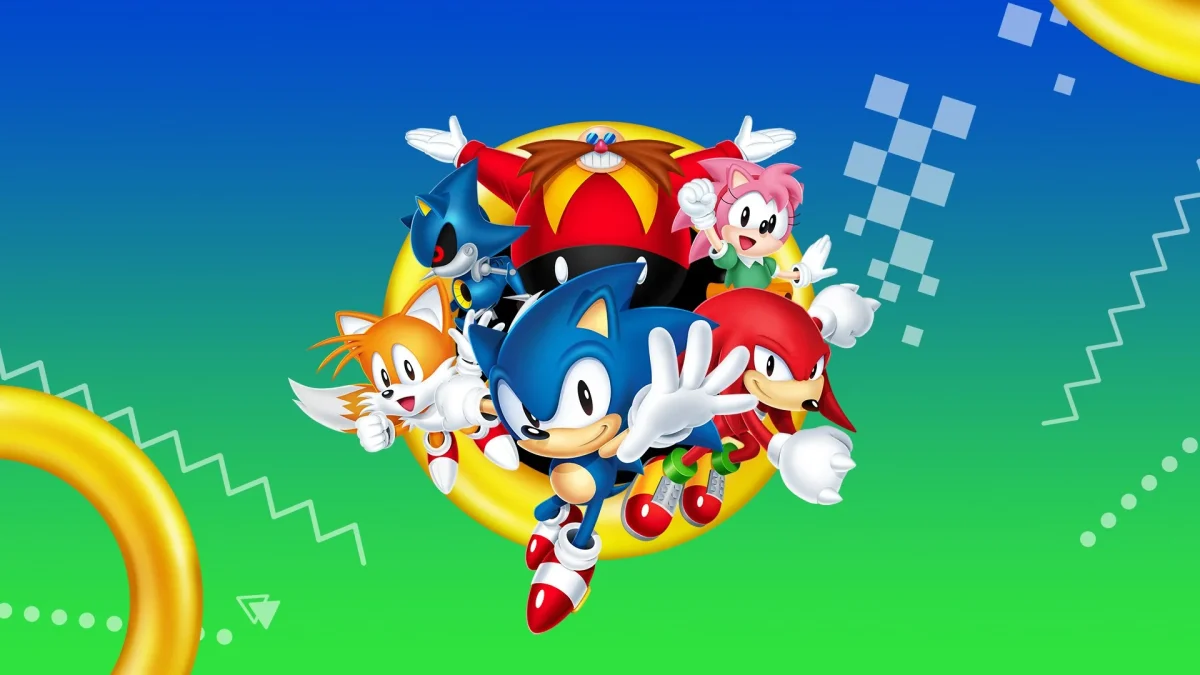







Welcome to the first story for Ezra’s Gaming Corner, but before we get started I have to establish how things are around here. Any and all opinions shared within this story or any other stories for Ezra’s Gaming Corner are all either my own true opinions, or they are a joke not meant to be taken seriously. That being said, everyone is entitled to their own opinions, and anyone is allowed to agree or disagree with each other’s opinions. Now that that has been taken care of, the subject of today’s review is Sonic the Hedgehog from 1991. The version that will be played for the review is the remaster included in Sonic Origins, which is based on the 2013 mobile port of Sonic 1.
Sonic the Hedgehog serves as the foundation for the rest of the franchise, and is therefore a very simple game, therefore, Sonic only has three abilities, running, jumping, and rolling while moving. In order to add more depth, the game relies on momentum to keep things interesting, with slopes, ramps, and loops punishing a lack of speed by blocking progression, while rewarding higher speed with a faster completion time. Sonic is able to collect golden rings that serve as a sort of health system, where as long as Sonic has one ring, he will lose all of his rings when taking damage, then die if he is hit with no rings. Every stage is split across 3 acts, with each act expanding and building upon the ideas of the previous, and the third act of every stage ends with a boss fight against the game’s antagonist, Doctor Robotnik, in his Egg Mobile, with a different attachment for each stage.
The first stage, Green Hill Zone, is a lush green environment with palm trees and brown checkerboard patterns along the ground. This level relies heavily on the momentum mechanics, with a large number of slopes and loops serving to teach the player about and how to use the momentum to their advantage. The Robotnik fight uses a giant ball and chain to attack Sonic. Marble Zone is an immediate and harsh remiender of why I don’t play this game very often, since most of the stages are less like Green Hill, fast with a large number of routes, but instead like Marble Zone, slow with only one path forward. Marble Zone consists of underground ruins constructed of purple bricks, which is also flooded with lava. This Robotnik fight uses a fireball launcher that sets a segment of the floor on fire.
The next stage is Spring Yard Zone, which is a large brown industrial building with green grates on the interior of the walls. The stage has bowl-esque areas that Sonic can traverse by rolling, but usually contain rotating spike balls to stop the player. There are also a large number of bumpers and springs that bounce the player around, serving to make the stage tedious to play through. The Robotnik fight has the doctor use a spike to remove parts of the floor to try and defeat Sonic. This next stage is one of the most infamous levels in all of gaming, being Labyrinth Zone. This entire level revolves around being underwater for most of its duration, and since the underwater mechanics are the same as normal, but slower, and Sonic drowns if he doesn’t collect an air bubble within 30 seconds, it makes the stage automatically terrible. That being said, the aesthetic is still good, being underground ruins with a large number of owl heads adjourning the walls and floors. The Robotnik fight is a chase through a vertical area of the ruins.
This next stage is finally a return to having the level design allow the player to use speed, being Starlight Zone, which is a large, green, under construction area. The level has a large number of slopes and loops, but also has moving staircases that the player must wait to move, which does break the pace from time to time. The Robotnik fight has the doctor dropping bombs onto seesaws, which can launch Sonic into the doctor to inflict damage, or Sonic can launch the bombs towards Robotnik. The final stage of the game is Scrap Brain Zone, the factory where Robotnik creates all of the robots that the small animals are trapped within. Each act takes place within a different part of the facility, with act one taking place outside of the facility, act two being inside of the facility, and act three being underneath the facility, and is just Labyrinth Zone, but grey. The final boss of the game is by far the most unique one of the bunch, with Robotnik being within a set of four crushing machines that come from the floor and the ceiling, with two of them moving per cycle, and Robotnik being in one of them. This means that the player must position themselves to avoid taking damage, while still being able to deal damage to Robotnik.
Beating the boss will end the game, with Robotnik taunting you with 6 gems after the credits roll. In order to collect these gems known as the Chaos Emeralds, the player must reach the end of acts 1 or 2 of a stage with 50 rings and jump into a large ring, which will transport the player into the Special Stage. The speical stage is a rotating maze where Sonic is constantly in a rolling state, and is only able to jump, and move slightly from side to side. In order to exit the special stage, Sonic can either hit the goal circles, which won’t reward you with the Chaos Emerald, or to collect the Chaos Emerald itself, which will reward the player with the Chaos Emerald. After getting all of the Chaos Emeralds and beating the game, Robotnik will be angry after the credits.
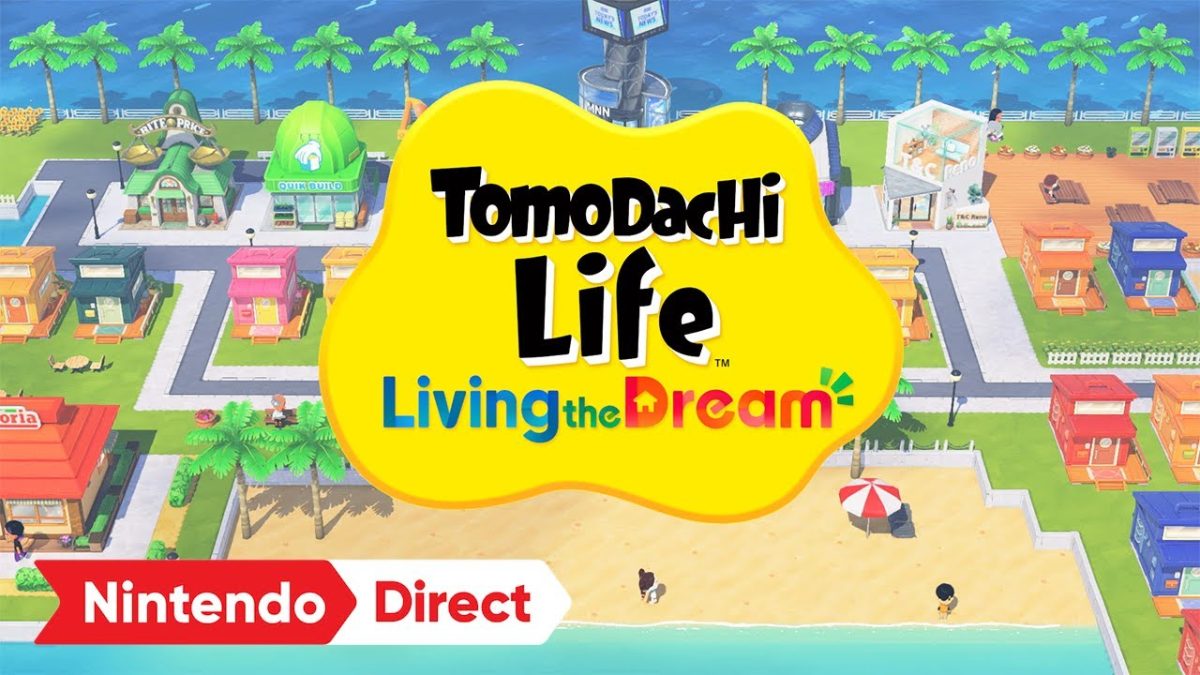
Overall, the game is decent, but slow level design, repetitive boss fights, and enemies that pose no real threat make me rate Sonic 1 at a 6 out of ten. My next review will be of a more recent game, being Tomodachi Life: Living the Dream. (As of writing and releasing this article, my copy of the game has yet to arrive at my residence.) I hope all of you enjoyed this entry of Ezra’s Gaming Corner.