












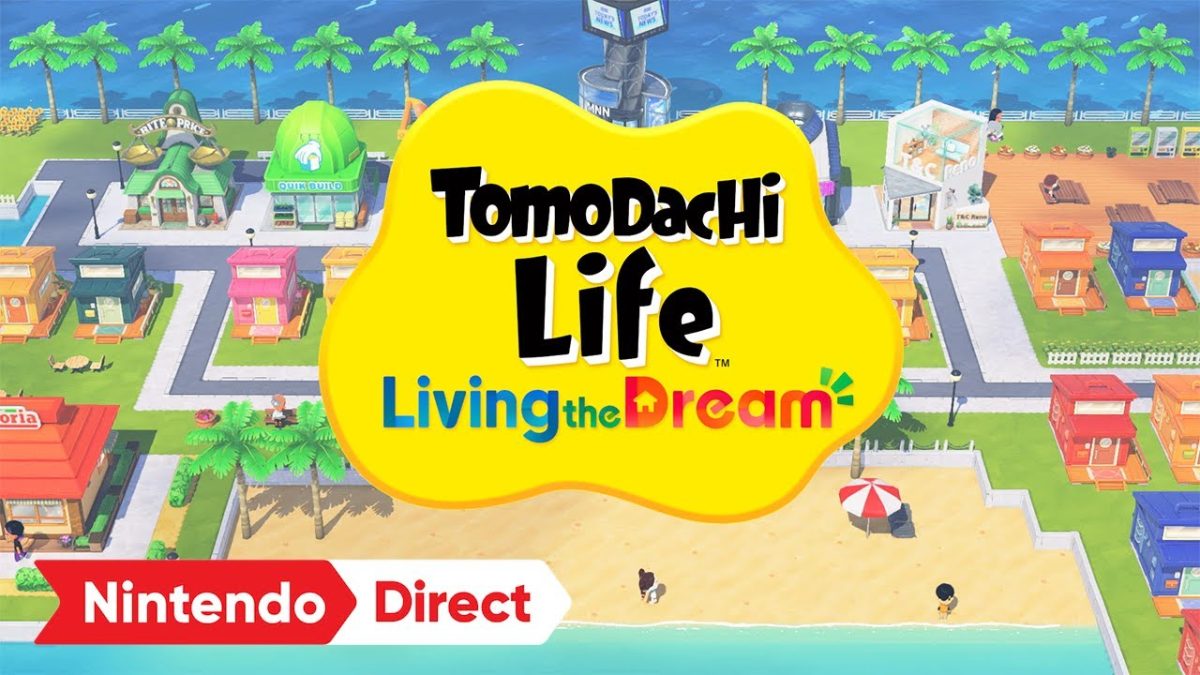







Hello everyone and welcome back to Ezra’s Gaming Corner, STEAM Academy’s weekly source of gaming reviews. Before we begin, I would like to remind everyone that this column is meant for entertainment, meaning that all opinions shared are either my own, or are a joke meant to entertain. Everyone is welcome to have their own opinions, whether they agree with others or not. The game being reviewed this week is very important to me, since it is a sequel to one of my favorite games growing up on the Nintendo 3DS, being Tomodachi Life: Living the Dream for the Nintendo Switch.
Tomodachi Life: Living the Dream is a game built around a very simple premise: create Miis, then watch them live their lives. Miis are customizable avatars that are simplified versions of humans, which were introduced with the Nintendo Wii launch game, Wii Sports. Miis are highly customizable, being able to change their head shape, eye shape and color, nose shape, hairstyle, hair color, mouth shape, and height. You are also able to customize the Miis’ gender, being able to select between male, female, and nonbianary, and are also able to select their dating preferences between the same three options.
After creating the Mii, you are able to select their personality with sliders to determine different attributes, which then selects one of sixteen personality types. After finishing the Mii, they are given an individual house on the island, with the color of the house matching with the color that corresponds to their personality type. When Miis are on the island, they will periodically have a problem that you are required to solve, like needing food, friendship assistance, and other things. After helping Miis, you receive “warm fuzzies” which are used on the wishing fountain to get more items to give to Miis after they level up after getting enough help. The more Miis are added to the island, the more locations are added to the island, such as grocery stores, clothing stores, home decor stores, and other places.
Miis are able to fall in love with other Miis that are of their dating preferences, but I believe that it is fully random and is unable to be affected in any way by the player. Once a Mii pronounces their love for the other, two outcomes are possible, either the other Mii accepts or rejects the proposal. If a proposal is accepted, then the two Miis will get married, and move into a shared home, where up to eight Miis can live together, and it is also possible for Miis who are friends to live together, but that appears to be random. If a Mii is rejected, then they will become sad, and the player will need to help them become happy again.
Once Miis are married, they are able to have kids, but I am currently unsure if it is exclusive to relationships between a male and female or if any relationship is able to have children. Once a married couple has a child, the credits roll, but the player is still able to continue playing without restrictions. Overall, the game is very good, but the overall simplicity of the game makes it incredibly repetitive, with only the humor of the interactions keeping investment, makes me rate the game at a 7/10.
The release of Tomodachi Life: Living the Dream is an incredibly important thing for Nintendo, since it is the first time that they have acknowledged the controversy from the previous game. When Tomodachi Life released internationally in 2014, there was a large amount of backlash from the community for not allowing the Miis to have gay relationships, which led Nintendo to say that they would implement the feature in a potential sequel. Due to the decade-long wait for Living the Dream to be announced, it led many to believe that Nintendo would never release a sequel to avoid addressing the controversy.